
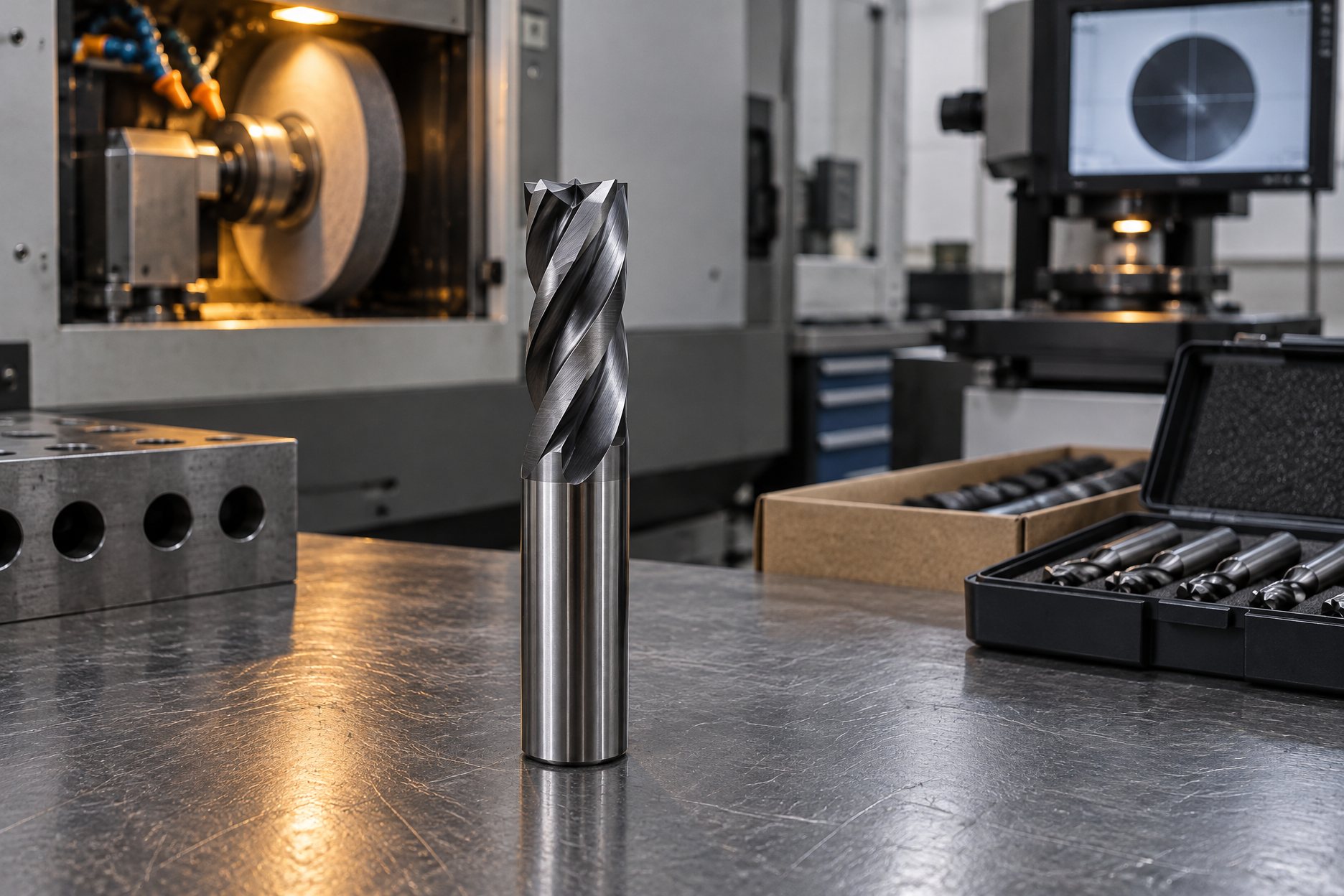
A center-cutting end mill, by another name
A slot drill is a center-cutting end mill - an end mill whose cutting edges meet at the center of the face, so it can plunge straight into solid material without a pre-drilled hole. That single capability defines the family. In UK and Commonwealth trade usage, "slot drill" is the word for this tool, kept distinct from "end mill" as a general term; in US usage the same tool is simply called a center-cutting end mill, and center-cutting is read as a spec line rather than a name. The tool is the same; the vocabulary is regional. The naming history is laid out in the slot drill vs end mill note, and the geometry distinction in center cutting vs non-center cutting.
What center cutting makes possible
Three operations follow directly from the center-cutting face. Plunging: driving the tool straight down into solid material to start a pocket, a window or a hole that milling will finish. Keyway work: cutting the keyseat that locks a gear or pulley to a shaft, usually with a series of plunge-and-traverse passes. Slotting: cutting closed-ended slots, where the tool must enter the material from above because there is no open end to enter from sideways. In all three, a non-center-cutting tool would need a drilled start hole - which is exactly the extra setup the slot drill exists to avoid. On older machines without rigid drilling cycles, that avoidance was not a convenience; it was the difference between one setup and three.
Why the form is short and rigid
Slot drills are typically built short: stub length of cut, stout core, overall proportions that put stiffness ahead of reach. Plunging and slotting load a tool axially and along its full periphery at once, which is the worst case for deflection and chatter; a short, rigid body is the geometry's answer. The usual flute count is two, with deep gullets behind the edges - chip room matters more than edge count when the cut is a full-width slot, and two flutes give the best chip evacuation of any count. The general trade-offs are in the flute count guide; for slot work, chip room usually decides.
Slot drill vs general end mill
| Line | Slot drill | General end mill |
|---|---|---|
| Center cutting | Yes - the defining feature | Specified per tool; not always |
| Flutes | Typically 2, deep gullets | 2 to 6 or more, chosen by material and finish |
| Form | Short, stub, rigid | Stub, regular or long |
| Named for | The plunging and slot work it does | The milling action itself |
Neither is better; they are optimized for different motions. A four-flute center-cutting end mill can plunge too, but its tighter gullets give chips less room in a full-width slot. The desk quotes both, and many buyers stock both: slot drills where plunging and keyway work dominate, higher-flute tools where wall finish leads. The square end mill page covers the general-purpose side of that drawer.
Runout, and why it shows up when plunging
Runout at the cutting edge shows up quickly in slot work: when a tool plunges, both edges share the cut, and any difference in edge height loads one edge harder than the other. That is why slot drill programs are inspected for total indicator runout at the cutting edge alongside the optical measurement of diameter and form. Acceptance figures are set per program and confirmed on the spec sheet - the desk does not quote a runout number in the air. What buyers can rely on is that the check exists and the result is written down before the box is sealed.
Carbide, HSS-Co, and coatings
Historically the slot drill drawer was HSS: the tough substrate absorbs the shocks of plunge-and-traverse work, and HSS and HSS-Co remain sensible on older machines and hand-operated setups. Solid carbide now carries most CNC slot work - stiffer, heat-tolerant, and precise at the form. Coatings follow the material: TiN or the TiAlN family for steels, uncoated polished flutes where aluminum is the work. The substrate and coating lines are confirmed per program, as on any spec sheet.
What the spec sheet names
| Diameter (D) | The slot width the tool cuts |
|---|---|
| Length of cut | Usually stub proportions on slot drills |
| Center cutting | Stated explicitly on the sheet |
| Flutes | Typically 2; confirmed per line |
| Shank / OAL | Holder fit and overall length |
| Substrate / coating | Carbide or HSS-Co; TiAlN family, TiN, uncoated polished |
Keyways, tables, and the sourcing angle
Keyseat work is the classic application: repair shops and machine builders cut keyways by the dozen, and a slot drill sized to standard keyway widths is stock-in-trade. Machine and fixture builders use them for slot features across tables, clamp straps and jigs. Because the widths are standardized, this is a family where the standard route works well - boxed quantities, commonly ten pieces per box, quoted per line item. Where a buyer needs a non-standard width, an unusual stub form or their own marking, the OEM route grinds to drawing from about 50 to 100 pieces per specification, samples in about 15 to 25 days, bulk about 30 to 45 days after approval - reference figures, confirmed in writing per program on the MOQ and lead time page.
If your list is a set of diameters and quantities, it quotes fastest as a sheet: send it with the quote form and the desk returns a route, a sampling plan and the open questions in writing.